Skip to content


Most companies book a trade show booth six months out, then forget about it until two weeks before the event. They scramble to prepare materials, brief the team, and show up exhausted. They collect business cards, head home, and let those leads sit for weeks.
Then they’re surprised by disappointing ROI.
Here’s what actually works. Companies that see real trade show returns start their campaigns 6 months before the event and continue them 3 months after. That timeline makes the difference between booth rental and pipeline development.
For manufacturing, life sciences, and industrial companies, trade shows remain valuable channels for reaching decision-makers. The problem is that most companies treat them as events instead of campaigns.
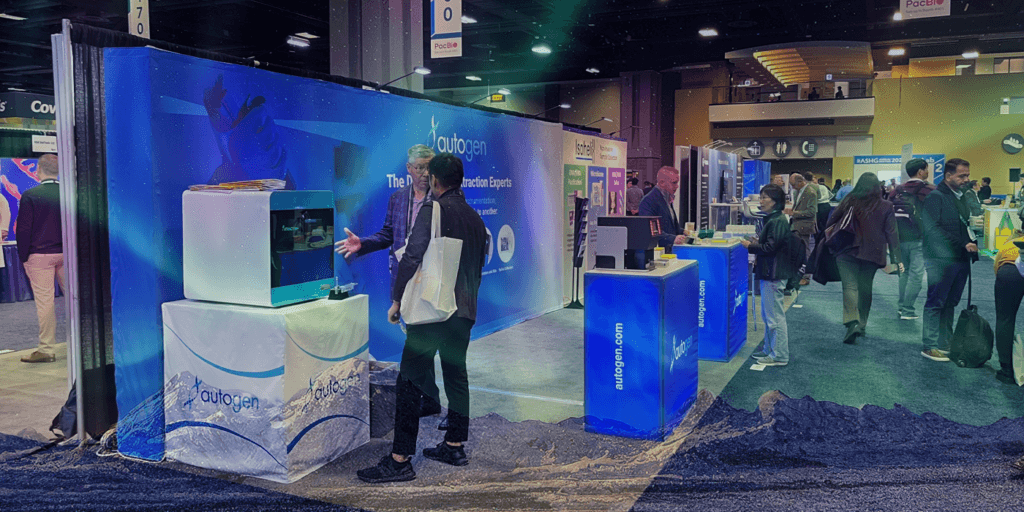
The Trade Show Marketing Cycle: Why Your Strategy Needs 6 Months, Not 1 Day
Why Trade Shows Still Work
Trade shows bring together engineers, procurement managers, and executives who are actively evaluating solutions. Attendees arrive prepared to research vendors and discuss their needs. For B2B companies in technical industries, this concentrated access is hard to replicate through other channels.
Buyers at events like PACK EXPO, IMTS, BIO International, and MD&M evaluate specifications, assess reliability, and consider long-term partnerships. These decisions benefit from in-person discussions that digital channels struggle to replicate.
Most B2B sales cycles extend weeks or months beyond that initial contact. Treating trade shows as isolated events misses the opportunity to influence buyers during critical research phases. A 6-month cycle creates touchpoints from initial awareness through purchase decisions.
The 6-Month Trade Show Marketing Timeline
4-6 Months Before
Trade show success starts with clear objectives. Product launches need demonstration space. Brand awareness needs visibility. Competitive positioning needs differentiation messaging. Each requires different resource allocation.
Strong programs set specific targets rather than vague aspirations. “Schedule 15 qualified meetings with automotive manufacturers” provides more direction than “get our name out there.” These objectives shape everything that follows: booth design, pre-show marketing focus, staff training priorities, and follow-up processes.
Actionable Tip: Document your objectives in a shared campaign brief accessible to all teams. Include specific success metrics, budget allocation by phase, and key decision-makers for each workstream.
3-4 Months Before
Pre-show marketing changes what happens at your booth. Without it, booth staff spend three days explaining what your company does to random walk-bys. With it, prospects arrive already understanding your value proposition and show up with specific questions.
When conversations don’t start from zero, booth staff can move quickly to qualification and substantive discussions. This efficiency results in more meaningful conversations and higher-quality leads.
What pre-show marketing includes:
- Email campaigns to registered attendees, highlighting specific demonstrations
- LinkedIn ads targeting decision-makers in your industry who plan to attend
- Direct outreach to key accounts, scheduling meetings before calendars fill
- Content addressing challenges you’ll solve at the show
Pull the attendee list 6-8 weeks before the event and segment by industry, role, and company size. Targeted campaigns for each segment outperform generic “visit our booth” messages.
Create a landing page for the event that includes your booth number, featured products, a meeting scheduler, and downloadable resources. This centralizes promotion and tracks early interest.
1-2 Months Before
The trade show floor is chaotic. Hundreds of exhibitors compete for attention. The booths that stand out aren’t improvising. They spent weeks preparing.
Train booth staff on messaging and the qualification questions that separate genuine prospects from information gatherers. Assign specific roles so everyone knows whether they’re greeting, demonstrating, qualifying, or escalating to senior staff. Test demonstrations and technology. Finalize graphics and collateral. Confirm pre-scheduled meetings.
Actionable Tip: Hold a comprehensive team meeting one week before the event. Review objectives, assign roles, and establish protocols for different scenarios, including what to do when competitors visit your booth.
During the Event
Use standardized questions that assess fit, timeline, budget, and decision authority. Focus on understanding challenges rather than delivering generic pitches. Tag leads with qualification levels in real-time so you can prioritize follow-up appropriately.
For highly qualified prospects, send information or schedule follow-up calls before they leave the event. Act while your conversation is fresh, before they’ve spoken with five of your competitors.
Actionable Tip: Brief your team every morning to set priorities. Debrief every evening to capture learnings and identify prospects requiring immediate action the next day.
48 Hours After
The first two days matter most. Prospects remember you clearly for maybe 48 hours. After that, you’re another vendor they met somewhere. Companies that follow up within 48 hours see conversion rates up to 3x higher than those who wait a week.
Hot leads need immediate sales contact with complete context about booth conversations and specific interests. Warm prospects need personalized outreach that references your discussion and provides relevant content. Even cooler leads benefit from acknowledgment, which positions you well as their needs evolve.
Deliver anything promised immediately. Technical specifications, case studies, pricing information. Fulfill commitments within 48 hours. For qualified leads, propose specific next steps like technical demonstrations or facility tours rather than vague “let’s stay in touch” messages.
Actionable Tip: Create email templates before the show for different prospect types. Customize them with conversation details immediately after booth interactions so follow-up deploys in hours, not days.
2-4 Weeks After
Trade show contacts enter longer-term nurture designed for extended B2B buying cycles. Most leads don’t convert immediately, but that doesn’t mean they’re not valuable for pipeline development.
Add qualified prospects to industry-specific automated campaigns delivering relevant content over time. Re-engage contacts who didn’t respond to the initial follow-up with different value propositions. Sometimes timing wasn’t right, or the message didn’t resonate.
Hand off hot leads to sales with complete context. Sales needs to know what was discussed, which demonstrations interested the prospect, what challenges they’re facing, and what timeline they mentioned.
Track how trade show contacts progress through sales stages compared to other channels. This data becomes critical for evaluating ROI.
2-3 Months After
Several months after the event, you have enough data to analyze actual results and document what worked.
Track opportunities created and revenue generated from trade show contacts over 6-12 months, not just leads captured. Calculate true ROI by accounting for all costs against attributed revenue. This complete picture often reveals that trade shows perform better than immediate post-show metrics suggest.
Document which pre-show tactics drove the best booth traffic, which messaging resonated most, and which follow-up approaches yielded the highest conversion rates. These insights compound as you refine your approach for subsequent events.
Read More: 20 B2B Marketing Strategies for 2025
What to Measure
Track lead quality, pipeline contribution, and revenue impact. Not just contacts collected.
Monitor qualified lead generation against defined criteria: budget, authority, need, and timeline. Meeting conversion rates show the percentage of pre-scheduled meetings that resulted in concrete next steps. Pipeline velocity shows how quickly trade show leads progress compared to other channels. Revenue attribution tracks closed business over 6-12 months, including both directly attributed deals and influenced opportunities.
Actionable Tip: Create a dashboard tracking trade show performance across multiple events and years. Look for patterns in which event types, booth sizes, and pre-show investments correlate with the highest ROI.
CRM systems track lead source and progression through sales stages. Marketing automation platforms measure engagement by trade show contacts. Event-specific lead capture apps integrate with existing systems.
Common Trade Show Challenges
Justifying ROI When Returns Take Time
Trade shows require significant upfront investment with returns that may not materialize for months.
Solution: Establish clear objectives and measurement frameworks before committing to events. Track full-funnel performance, including pipeline influence and long-term customer acquisition. Build historical data showing which events consistently produce opportunities that convert at higher rates than other channels.
Maintaining Momentum Across Long Campaigns
Six-month cycles require sustained effort from multiple departments.
Solution: Break campaigns into distinct phases with specific deliverables and deadlines. Assign clear ownership. Schedule regular check-ins. Celebrate milestone completions to sustain energy and demonstrate progress.
Coordinating Cross-Functional Teams
Success requires coordination between marketing, sales, operations, and often engineering.
Solution: Establish a trade show task force with representatives from all departments who meet regularly throughout the campaign. Create shared documentation outlining objectives, messaging, roles, and processes. Define handoff protocols explicitly, particularly between marketing’s lead capture and sales’ follow-up.
Standing Out in Crowded Environments
Hundreds of exhibitors compete for attention, making differentiation challenging.
Solution: Focus on memorable experiences rather than the largest booths. Interactive demonstrations, knowledgeable staff, and authentic engagement often outperform expensive booth designs. Use pre-show marketing to deliberately attract target prospects rather than relying on walk-by traffic.
Converting Contacts Into Customers
Many companies generate trade show leads but struggle to convert them into actual business
Solution: Treat trade show contacts as the beginning of longer relationship-building processes. Develop industry-specific nurture campaigns providing ongoing value. Track assisted conversions where trade shows influenced opportunities but didn’t directly source them. Measure impact over 6-12 months rather than expecting immediate returns.
Conclusion
Trade shows are among the largest line items in most B2B marketing budgets. Companies that treat them as isolated events consistently see disappointing returns. The difference between wasted investment and real ROI comes down to timeline management.
Strategic trade show marketing spans 6 months. It starts with clear objectives and pre-show promotion that changes booth dynamics, executes with systematic processes during the event, and follows up with both immediate outreach and longer-term nurture. This approach requires more coordination than showing up with a booth and business cards, but it transforms trade shows from expensive vendor appearances into sustained pipeline development.
An integrated marketing approach that treats trade shows as campaign focal points yields the best results. With two decades of experience executing trade show campaigns for manufacturing, life sciences, and industrial clients, Altitude Marketing helps B2B companies develop programs that consistently generate qualified leads and measurable business outcomes.
We help leading business-to-business brands hit their marketing goals. Get in touch to learn how Altitude Marketing can help you reach your peak performance.