Skip to content


For years, digital visibility has largely revolved around one idea: ranking on Google. If you could get to page one, you could win traffic, leads, and attention. Simple, at least in theory.
For industrial and manufacturing companies, SEO strategies most often focused on conquering niche, very low-volume rankings that matched the predicted words and phrases used by prospects. Marketers though faced (and still face) a challenge: search algorithms themselves were often not the first or only tool used by buyers to build a shortlist. Insular expertise, massive potential contract values, and institutional knowledge meant offline brand exposure and referral mattered as much–if not more so–than the amount of keywords a company ranked for.
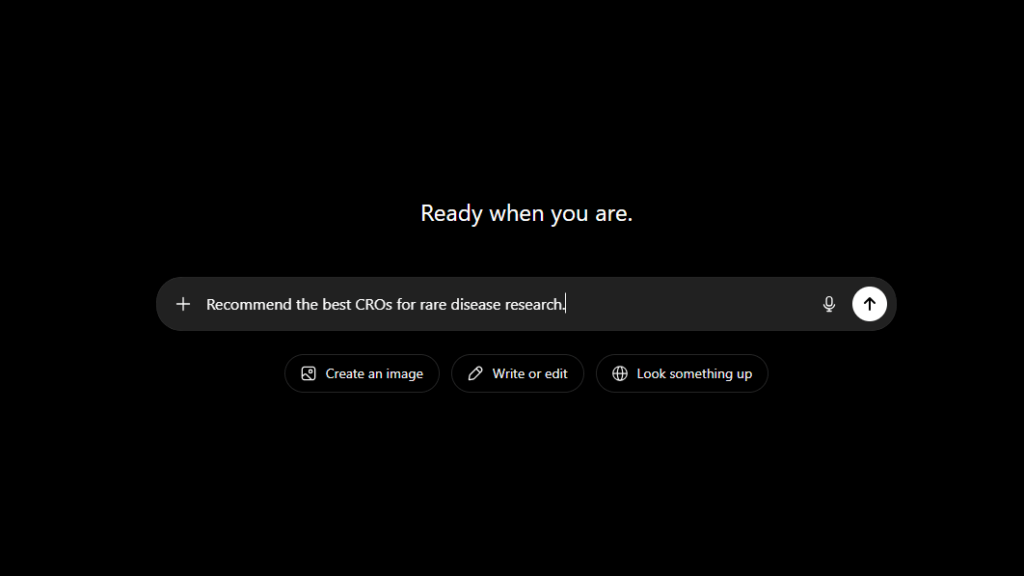
AI search tools are subtly, but rapidly changing this paradigm. The human-like response generated by a Claude, ChatGPT, or Perplexity, almost act like a referral in their own right. Buyers are turning to these platforms to shortlist, and likely imbuing a much higher level of trust than traditional search algorithms.
That shift is where AEO comes in. And for manufacturers in particular, it’s becoming increasingly important—not because SEO is going away, but because the way buyers discover and evaluate industrial products is evolving.
AEO for Industrial Companies
What is AEO?
AEO is the practice of optimizing your content so that both LLMs and search engines are more likely to reference and cite your company in a response to a buyer’s prompt.
Instead of just trying to rank a webpage, AEO prioritizes mentions and citation in platforms like:
- AI search tools (like Google’s AI Overviews)
- Voice assistants (like Siri or Alexa)
- Chat-based search interfaces
- Featured snippets in traditional search
In other words, SEO is about visibility in search results. AEO is about becoming the answer itself. That distinction might sound small, but it changes how content needs to be built.
Why This Shift is Happening
Search engines have been moving in this direction for a while. People don’t want ten links; they want clarity. If someone asks: “What is the best material for high-temperature industrial seals?”, they don’t necessarily want a list of articles. They want a direct explanation.
AI systems are designed to meet that expectation by synthesizing information from multiple sources and presenting a single, coherent response.
That means content that is clear, structured, and authoritative is more likely to be used, while content that is vague, overly promotional, or buried in jargon is less likely to surface.
How AI Search Impacts Industrial Companies
Industrial sectors have a buying journey that is unusually complex. Decisions often involve:
- Multiple stakeholders (engineers, procurement teams, operations leaders)
- Long evaluation cycles
- Highly technical specifications
- Risk considerations (downtime, safety, compliance)
In this environment, buyers are constantly researching, and often long before they ever speak to a sales rep.
And increasingly, they’re doing that research through AI-assisted search. That’s where AEO becomes highly important. If your content is not structured to answer questions clearly, you risk being left out of those early-stage discovery moments entirely.
What AEO Looks Like in Practice
AEO doesn’t mean rewriting everything in a robotic Q&A format. It’s more about how information is shaped. Here’s what strong AEO content tends to include:
1. Direct answers upfront
Instead of burying definitions deep in paragraphs, AEO content tends to lead with clarity.For example, if a page is about industrial pumps, it should clearly define:
- What the pump is
- What it’s used for
- Where it fits in a system
2. Question-based structure
Manufacturing buyers ask very specific questions, such as:
- “What is the difference between centrifugal and positive displacement pumps?”
- “What causes seal failure in high-pressure systems?”
- “How do you reduce energy consumption in compressed air systems?”
AEO content anticipates these questions and answers them explicitly. This makes it easier for AI systems to extract relevant sections.
3. Plain, precise language
One of the biggest barriers in manufacturing content is unnecessary complexity. Technical depth is important, but clarity matters more for discoverability. AEO favors:
“This valve regulates pressure in fluid systems”
As compared to:
“This solution enables optimized pressure modulation across dynamic hydraulic environments”
Both may be technically accurate, but only one is easily interpreted by an AI system trying to generate an answer.
4. Modular content blocks
Think of each section as a standalone explanation. That structure helps AI systems lift and reuse specific parts of your content without losing meaning.
How Industrial Marketers Should Adapt
You don’t need to rebuild everything from scratch. AEO is more of a layering strategy than a full reset. Here are practical ways to start:
Start with real customer questions
Talk to sales teams, service engineers, and distributors. The best AEO content starts with the actual language buyers use, not marketing assumptions.
Rework existing pages before creating new ones
Many manufacturers already have strong technical content. The issue is structure. Start by:
- Adding clear definitions at the top
- Breaking long paragraphs into focused sections
- Turning dense explanations into question/answer formats
Think in “answers,” not just topics
Instead of writing a page titled: “Industrial Filtration Systems” Consider: “How do industrial filtration systems remove contaminants from process fluids?”
That shift alone changes how AI systems interpret your content.
Strengthen internal consistency
AEO relies heavily on clarity across your site. If different pages define the same concept differently, AI systems may avoid citing your content altogether.
Common Mistakes to Avoid
AEO is still new enough that a lot of content misses the mark. A few common issues:
- Writing only for algorithms: Over-optimizing for structure can make content feel robotic or disconnected.
- Ignoring technical accuracy for simplicity: Clarity is important, but not at the expense of correctness, especially in manufacturing.
- Treating AEO as separate from SEO: They work together. Strong SEO still helps visibility; AEO just changes what happens once you are visible.
Final Thoughts
Search is moving toward fewer clicks and more direct answers. That doesn’t mean websites become less important. It means their role shifts.
Instead of being just destinations for traffic, they become sources of truth that AI systems rely on to generate responses. For manufacturers, that creates both a challenge and an opportunity:
- A challenge, because traditional SEO tactics alone won’t guarantee visibility
- An opportunity, because well-structured, original knowledge becomes far more valuable than ever before
Companies that document their expertise clearly—without unnecessary friction—are more likely to stay visible as search evolves.
Manufacturing buyers don’t want marketing language. They want answers that help them make decisions with confidence. And increasingly, the systems they use to find those answers are designed to reward exactly that: clarity, structure, and usefulness. The companies that adapt to AEO early won’t just rank better—they’ll become part of the answers people rely on.